Week 37/2026
Tu verrais que le monde est beau
NSFW (Nikolaus' Song For the Week)
This week's NSFW is a beautiful chanson with a wonderfully photographed video, performed by French chansonnière ZAZ.
It was recommended to me by my most critical reader.
There's also a nice live version on YouTube.
She's currently (still) on summer tour and also quite active on Instagram.
Retrospect
Gear
Due to the upcoming Japan-trip later in September, I clearly felt that it was no longer possible to live without a new camera. I want to do some travel-diary vlogs in Japan and was therefore looking for a versatile, small pocket camera. After countless hours of binge reading and youtubing, I knew that I had to chose between an Insta 360 Luna Ultra and a DJI Osmo Pocket 4P Vlog Combo. There's, probably, more than 100 hours of YouTube content to answer the single question which one of the two to chose alone. I procrastinated efficiently by watching most of these and finally ended up in buying the latter.
My impressions are mixed, so far. On the one hand it's unbelievable how much camera you get for so (comparatively) little money in such a small device. On the other hand, many details suck, such as: you need to charge 3 different subdevices (mic, remote control, camera) with 3 different charging adapters. On top of this, you are only provided with the cables but not the plugs so that you need to organise yourself a charging option with 3 more gadgets on the desk.
You get only one mic in the vlog combo, not two, so that you need to buy another one - again with a charging cable - if you want to do interviews. The mic's sound quality is not really compelling. The protective bag is a joke - with the look and feel of a too small toiletry bag so that you need to buy a hard case.
The user interface on the camera is far from self explanatory. The app is blocked in the Google App store - trade war, galore! And so on.
Here's one of the better product reviews I watched, if you are interested:
Again, I am fighting whether I should finally jump deeper into the sea of LUTs, 32bit floating audio and all the other known unknowns I don't know whether anybody would realize and appreciate the difference.
At the end, however, it's truly remarkable what you get out of this tiny device without any expertise in and time for post production. I did a test video with zero editing on Tuesday in UNIVIE's magnificent courtyard.
There's a WIKI with more information on all the monuments.
Magnifica Humanitas
Pope Leo XIV published one of the most interesting texts on AI that I have read in a rather long time: the ENCYCLICAL LETTER ON SAFEGUARDING THE HUMAN PERSON IN THE TIME OF ARTIFICIAL INTELLIGENCE. It says a lot of interesting things about AI and how to regulate it.
I was, in particular, attracted by the parts on warfare (margin numbers 197 et seq,).
"First, all systems used in a war setting must guarantee the possibility of retracing and reconstructing decision-making processes, so that accountability and blame are not collapsed into “the machine.” Second, the decision to use lethal force cannot be delegated to opaque or automated processes, but must remain under effective, self-aware and responsible human control. Finally, it is imperative to establish a shared framework — also at the international level — in order to curb the technological arms race and ensure robust protection for civilians and the infrastructures necessary for their survival."
My colleague at UNIVIE, Prof. Dr. Alexander Filipović, was so kind to share some of his insights on the text with me in an #arsboni interview.
There's a lot of text written on the encyklika and Filipović also gave a very interesting lecture on the topic that is on YouTube.
Innovative Health Initiative - IHI
IHI is a huge European funding scheme financing research in medicine, based on public-private partnership funding principles. The overall budget lies at €2.4 billion. COMMUTE - of which we are a proud member of - is funded via this scheme.
The Federal Ministry of Education, Science and Research and the FFG held a meeting for Austrian stakeholders on Monday that I attended (in parts).
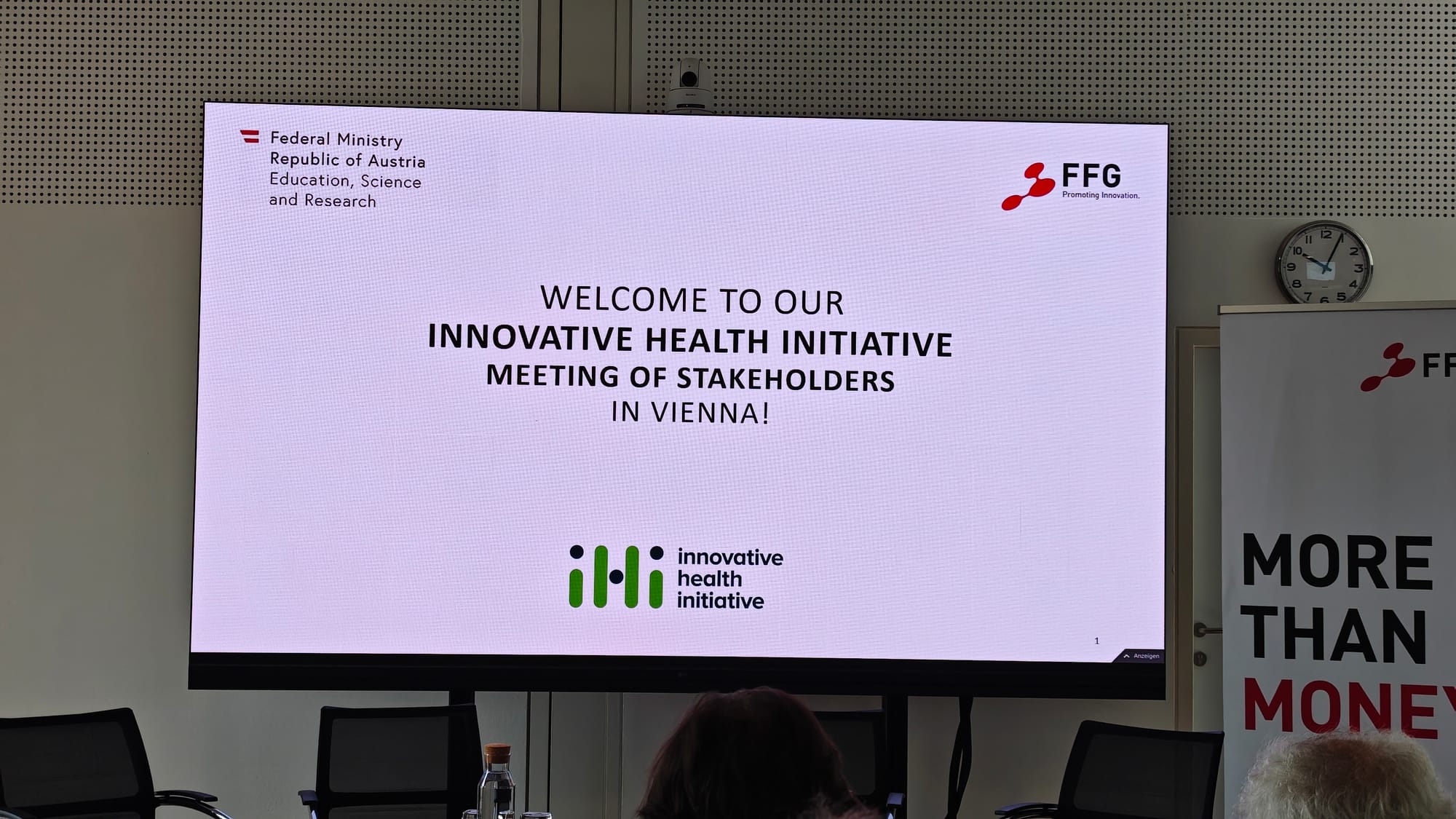
Some more on program and participants is on LinkedIn.
Austrian Judges Association
The Austrian Judges Association has a newly established advisory board on AI. I am a proud member of this body and participated in its first meeting on Thursday. In preparing the meeting and going there I learned a lot, again, about how difficult it is to steer IT-strategies and their changes in large institutions. I also learned that, by today, a judge who is fluent in English (or any other language) still has to rely on official translations of documents provided in this language - or otherwise must not use them in a case. Quod non es in lingua germanica, non est in mundo.
I did a reel right after the meeting, with my new camera, in front of Justizpalast.
Prospect
Post-COVID challenges
COMMUTE is organising an online expert panel discussion on September 10th 2026, at 10.30 am on Post-Covid.
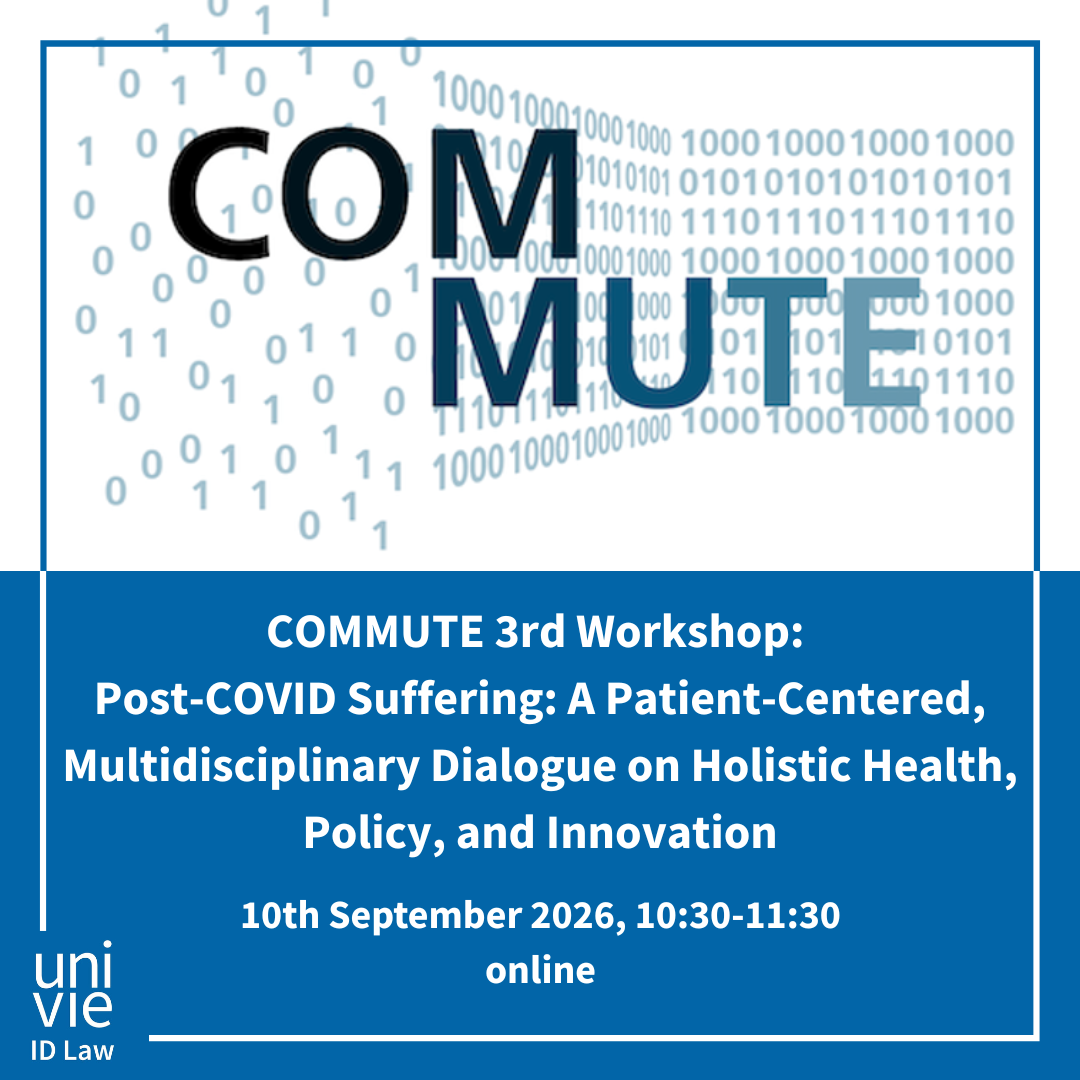
The panel brings together clinical, ethical, and interdisciplinary experts to explore the evolving challenges of post-COVID, with a strong focus on patient experiences and needs.
Moderator: Prof. Rejko Krüger, MD, Coordinator, National Centre for Excellence in Research on Parkinson’s disease (NCER-PD); Director of Neurology, Luxembourg Research Clinic (LRC), Luxembourg Institute of Health (LIH); Neurologist and Medical coordinator, Réseau de Compétences Maladies Neurodégénératives, Centre Hospitalier de Luxembourg (CHL); Professor for Clinical and Experimental Neuroscience, University of Luxembourg (UL).
Panelists:
Sarah Bauermeister PhD, CPsychol, AFBPsS, MSc, BSc Hons, BA Hons, Associate Professor of Cognitive Neuropsychology, University of Oxford; Co-Director Brainwaves UK
Linda Andresen, Coordinator, ACUTE Clinical Academic Group; Chief of Staff, Department of Clinical Research, Amager and Hvidovre Hospital, Denmark
Dr. Michael Stingl, MD, Neurologist, CerePrax Austria
Registration: Registration is required to receive the access link. One can register HERE by 8 September 2026.
I am, in particular, happy to see Michael Stingl again who is such an important voice on COVID and ME/CFS and who was so kind to share his knowledge during the pandemic so generously and so early, also in ars boni, for example in episode 76 from November 2020.
𝗙𝗼𝗿𝘂𝗺: 𝗖𝗵𝗶𝗹𝗱 𝗦𝗮𝗳𝗲𝘁𝘆 𝗶𝗻 𝗗𝗶𝗴𝗶𝘁𝗮𝗹 𝗘𝗻𝘃𝗶𝗿𝗼𝗻𝗺𝗲𝗻𝘁𝘀
A short outlook on October: We will have a very relevant event on social media bans for the youth and other matters of youth protection on October 13th.
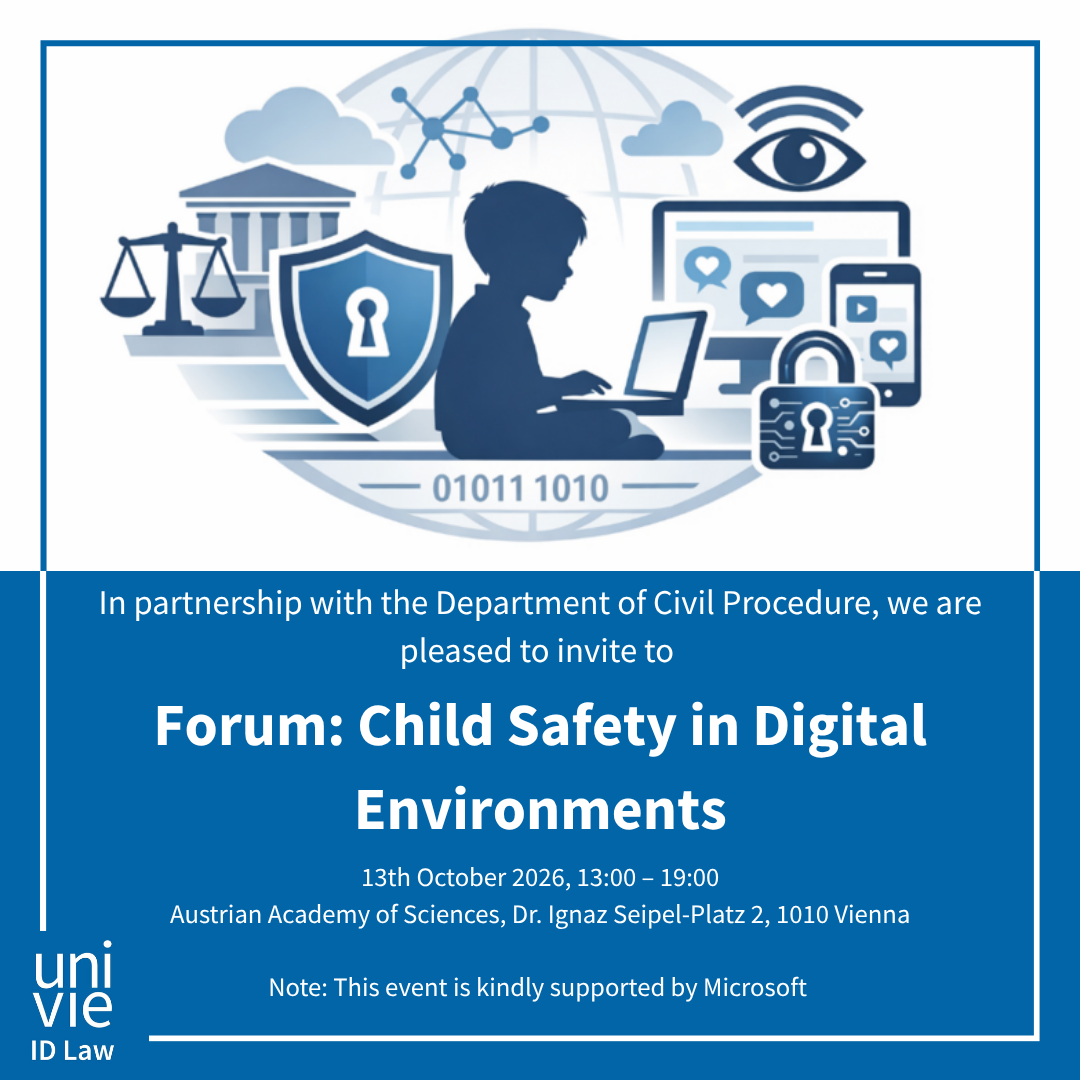
Bringing together experts from government, academia, industry and civil society to discuss how children can be better protected online. The discussion aims to identify key risks, develop recommendations for regulators and industry, and strengthen cooperation for safer digital environments.
Here's the preliminary program:
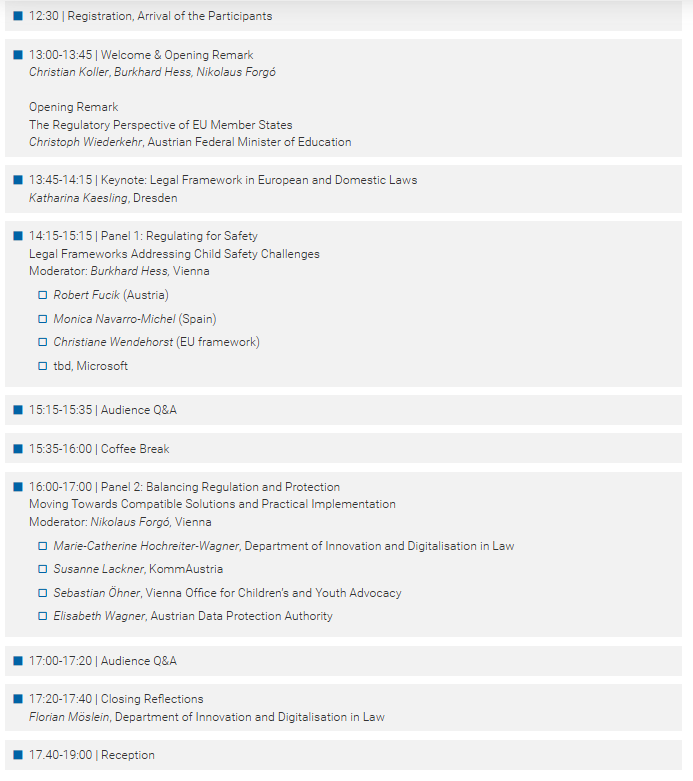
Location: Austrian Academy of Sciences, Festive Hall & Aula, Dr. Ignaz Seipel-Platz 2, 1010 Vienna
Free entry, registration required, no stream.
#arsboni
On Monday, September 7th, at 17.00 CET I will interview Prof. Dr. Dietmar Jahnel on his legal information system RIDA online and how they implement AI in the system - and what AI changes in legal work.
Look and Feel
Der alte König in seinem Exil and Pusztagold
One of the many reasons why I like Buchhandlung Riedl is the table in front of their counter where they have, I believe, their recommendations. I almost always find something interesting there I hadn't heard about before. A few weeks ago it was "Pusztagold" that I bought, in particular, because of the title's spelling "Pusztagold" (with a Hungarian "z").
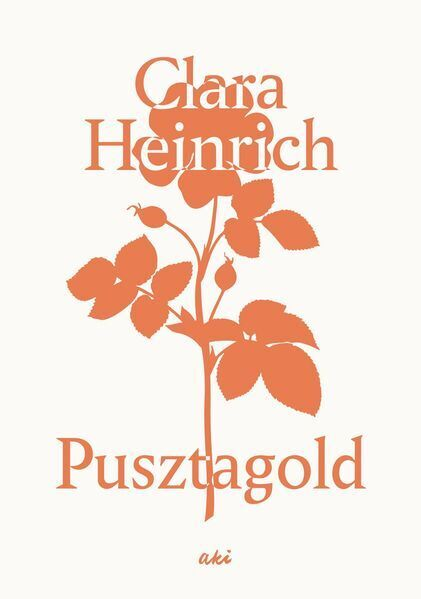
I read it this week, alternately with Arno Geiger's "Der alte König in seinem Exil"
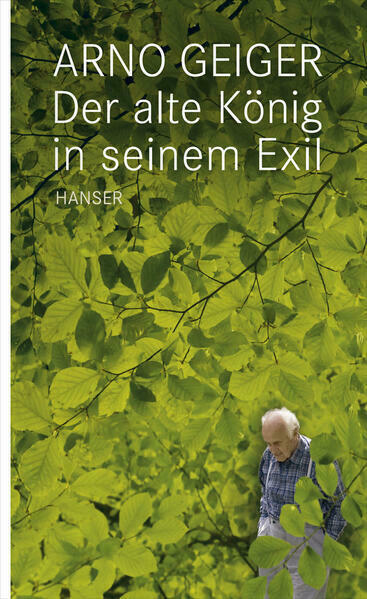
and loved both books so much - also how they talked to each other in my mind. Both are about the past, about the author's personal perspectives, about care, decay and melancholy. Geiger, born in 1968, just like me, writes about his father's dementia and about closeness and distance - in a very personal, yet very reduced and simple language.
Clara Heinrich, born 1993, therefore from a very different generation than mine, writes about plants, her youth in Burgenland and, in particular, about care and the ME/CFS disease of her partner. It's brilliant. I read it more like a personal diary, feeling somehow ashamed to look so deeply into another individual's thoughts. Her language is beautiful and her description of modern medicine is just precisely, precisely to the point. One can read it as an educational book about a terribly underestimated cruel disease, as a poetic analysis of care and caregiving, as an anthology of her homeland, as an introduction into gardening and as a precise language assessment. One of the best books I have read for quite some time.
Here's a long interview with her
and she also has a nice Instagram-channel. She won, inter alia, the Clemens-Brentano-Preis for the book.
Have a wonderful week and take care of yourself!
Kind regards
Nikolaus (Forgó)