Week 21/2026
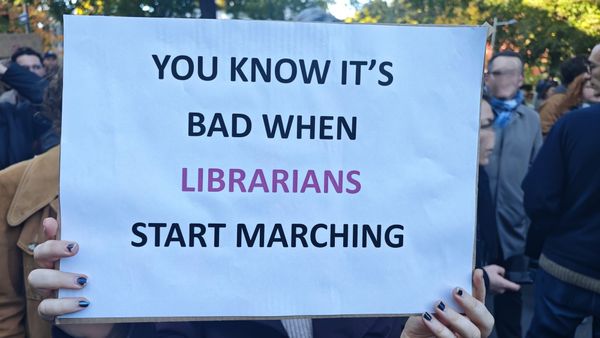
Dafür mehr Optimismus

NSFW
This week's song "sozialismus in discos" is from a band I was first introduced to by my professor of legal philosophy, Gerhard Luf, anytime around 1990. I remember him referring quite enthusiastically to them and I very much recall my amazement about that unforeseen drift into popular culture. Unfortunately I can not tell the lecture's topic (Kant, presumably) nor the song Luf discussed either (something from "Pflug" probably).
The are still very active and presented a new album "Wos" recently, "sozialismus in discos" is part of. I appreciate, in particular, their irony and humor, combined with brilliant technical skills.
Willkommen Österreich had an interview with them recently,

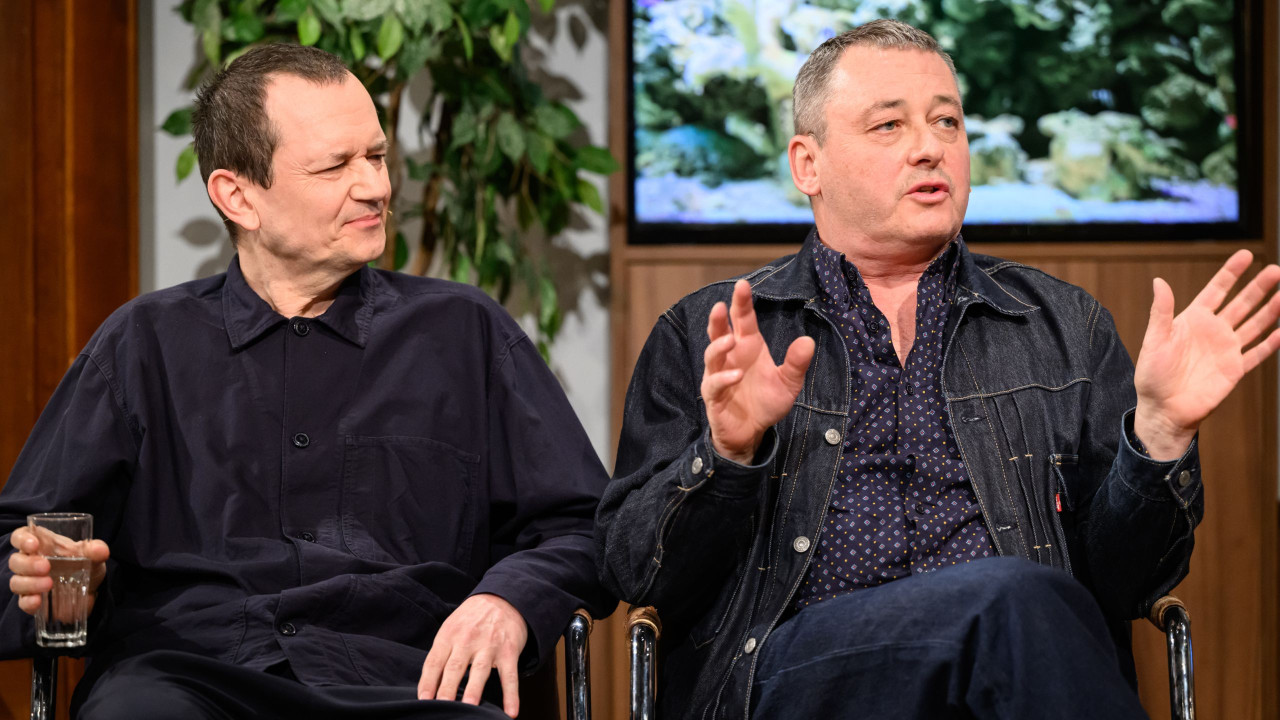
Kulturmontag a slightly longer portrait in 2021
and here's a 15 years old longer documentary, celebrating the band's first 20 years then
https://www.youtube.com/watch?v=lfqIb-w6VSw
Retrospect
Gigs
Tuesday was a busy day, I attended three events. The morning brought me to the Apothekertrakt of Schönbrunn Castle (magnificent venue!) for dhealth 2026
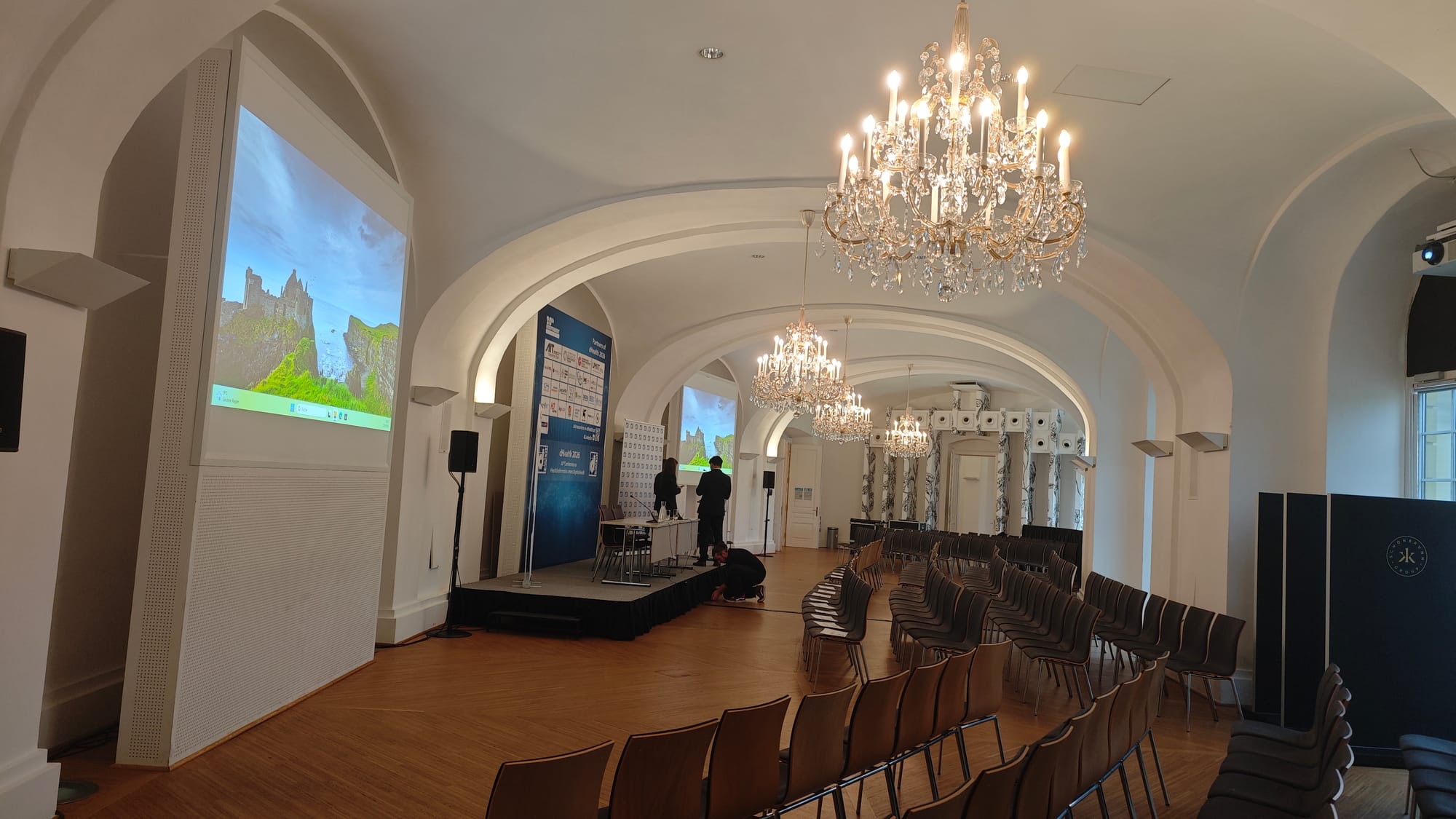
where I had, in particular, the opportunity to follow a panel debate on changes and challenges in the medical profession, led by Dietmar Bayer Österreichische Ärztekammer, Rudolf Knapp, Österreichische Ärztekammer and Anja Laschkolnig, Gesundheit Österreich GmbH, moderated by Sophie Niedenzu.
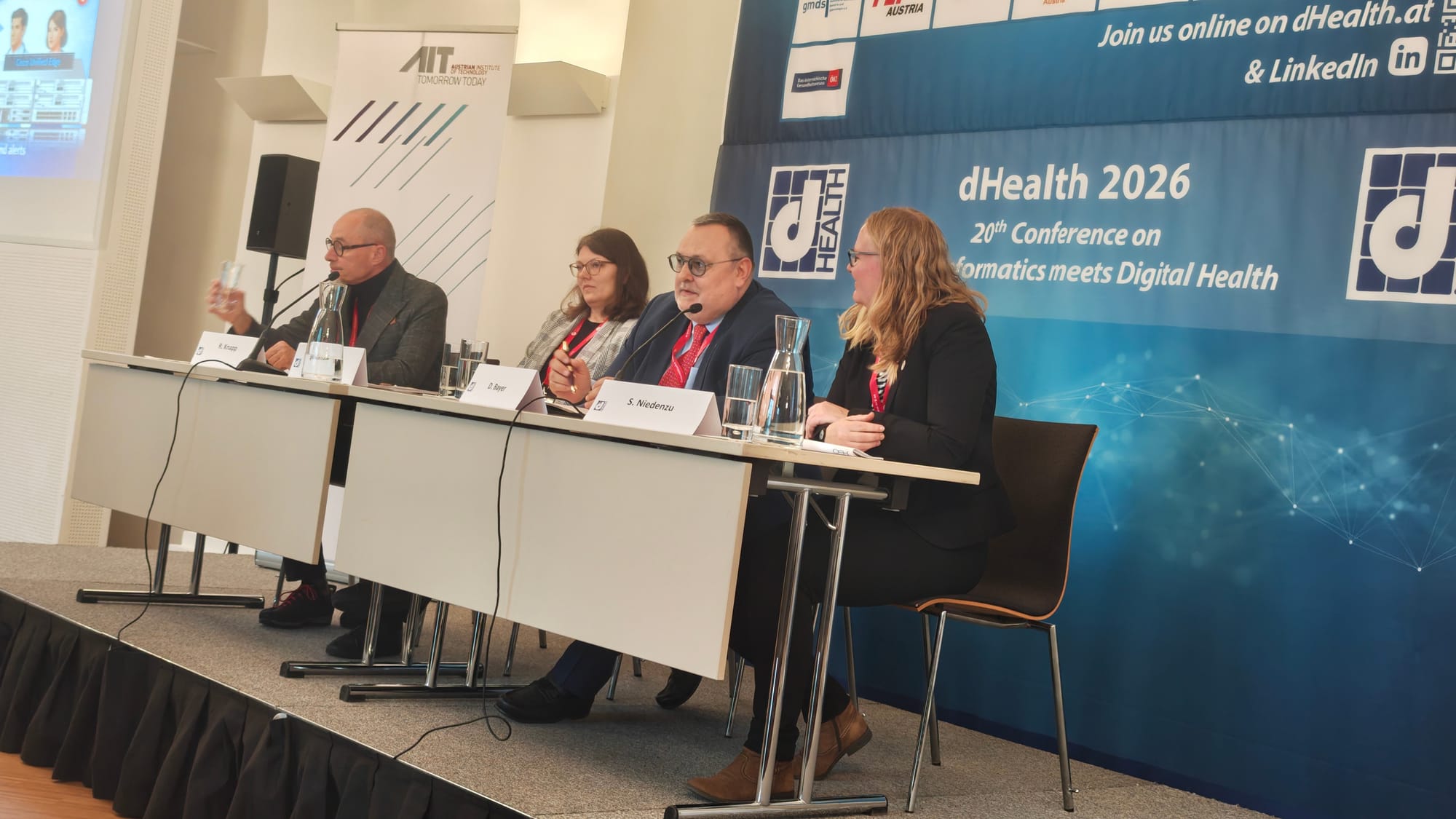
The panel consistently highlighted the strength and importance of the European, ethics, value and law-driven approach to AI in medicine and looked deeper into changes in the medical curriculum triggered by AI. The importance of continuous education of doctors in later career phases was mentioned as well. Bayer is, inter alia, president of the Austrian Society for telemedicine, a relevant organisation in the field. Österreichische Ärztekammer has more on their LinkedIn, Franz Leisch as well.
In my talk I brought, in particular, two recent stories. One was on a fake disease invented to proof how easily LLMs can be triggered to provide false health information, the other one increase of paper mills and fake medical publications due to LLMs. I am afraid that my contribution was perceived as too pessimistic, as many mentioned afterwards that they would see more light than I do; in my view, I was as realistic and honest as possible.
I used the disease story, in particular, for a short video to remind everybody of the job offer we are currently making.
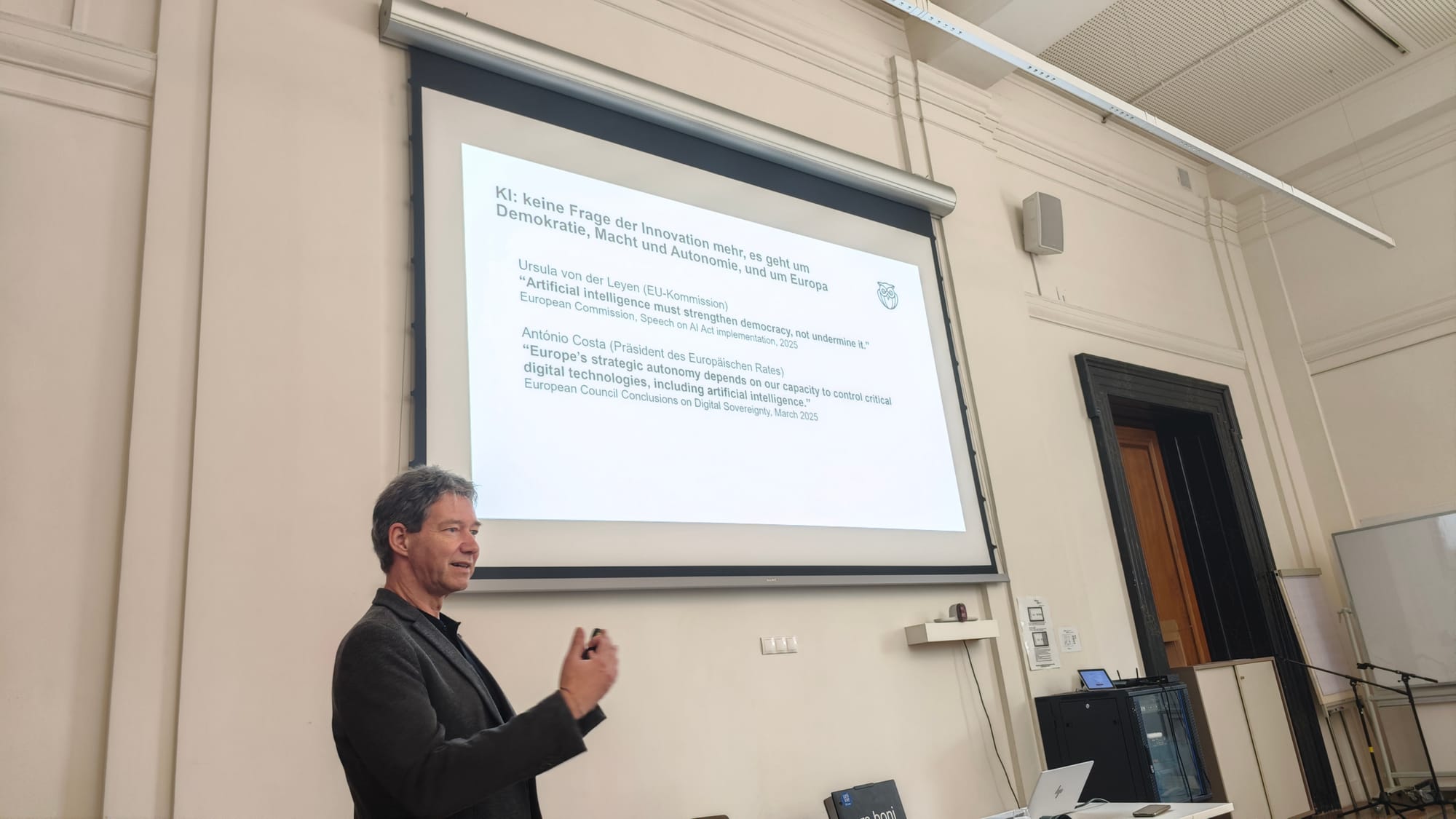
I then attended an internal event on AI at the University of Arts. Remarkably, the whole rectorate, as well as many professors and senior scientific and administrative staff were present - and highly interested. I profited a from a fundamental presentation on how AI functions, delivered by Prof. Dr. Stefan Wegenkittl,
and a very interactive and thrilling presentation on how to use text to image, text to video and similar generators in daily educational practice, given by Helena Schmidt and Franziska Thurner
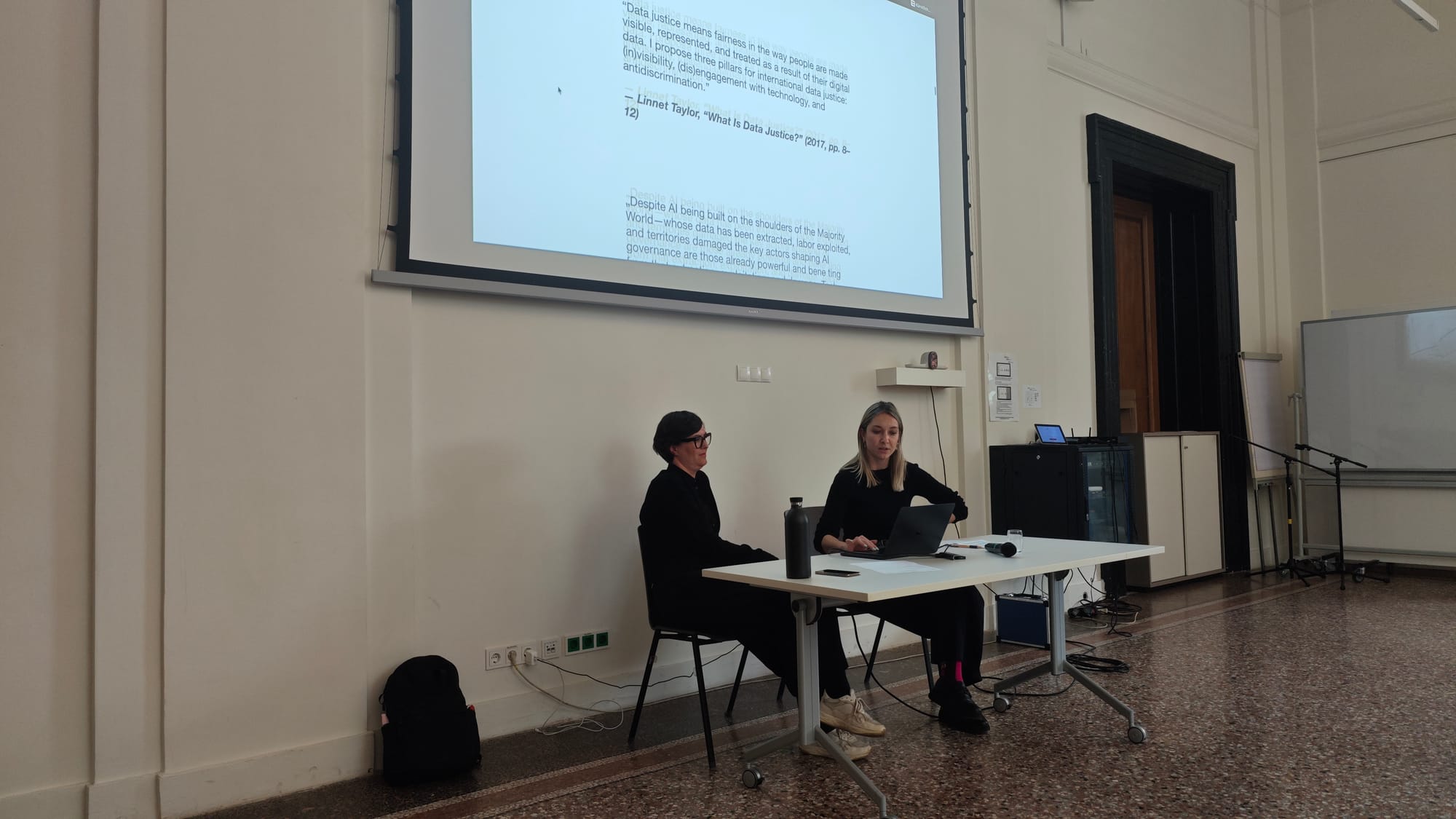
Their - very relevant - material is fully available via Franziska's nice website with the beautiful address katzekatzekatze.org. They let, inter alia, play the audience around with Google Clickdraw, a nice project making it very clear how pattern recognition works.
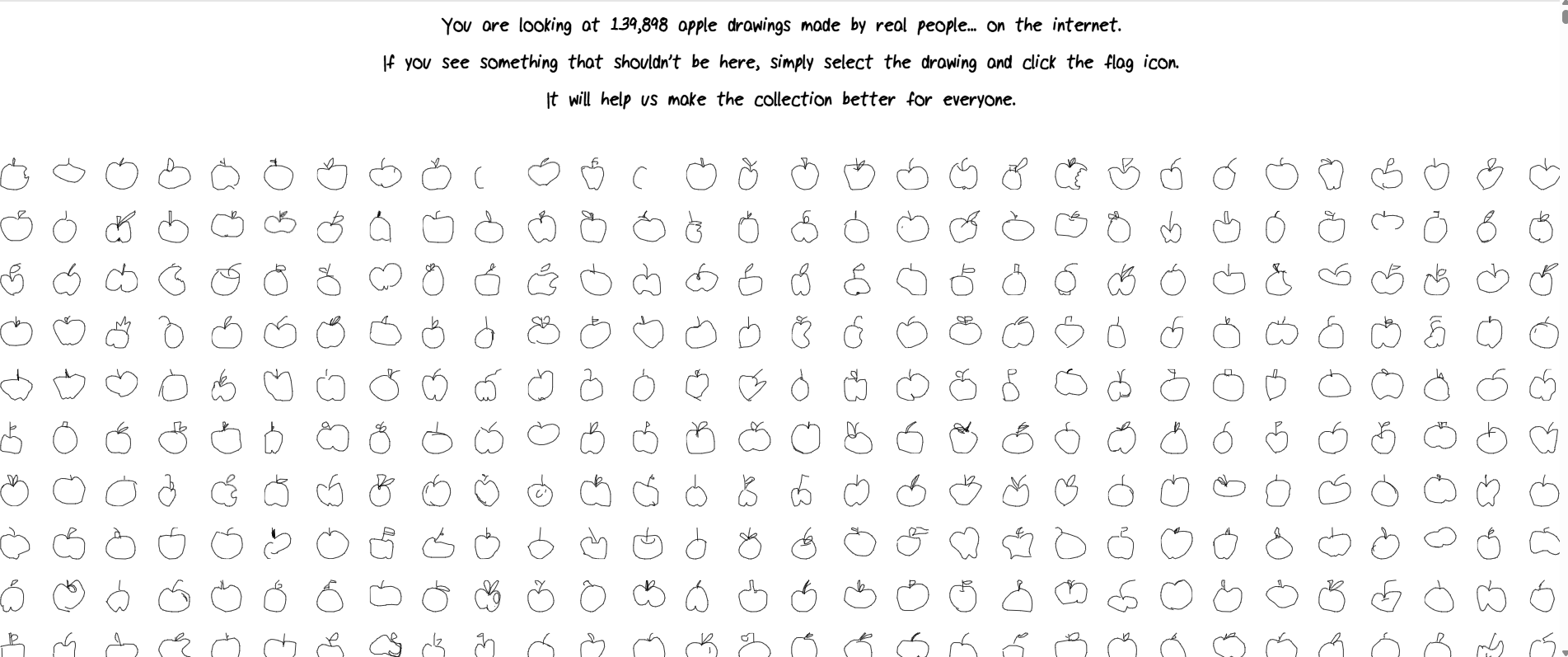
Again, my own presentation was probably not positive and diplomatic enough as I pointed, in particular, at the rectorate's key role in helping staff to mitigate legal risks when using AI, stemming from badly written laws.
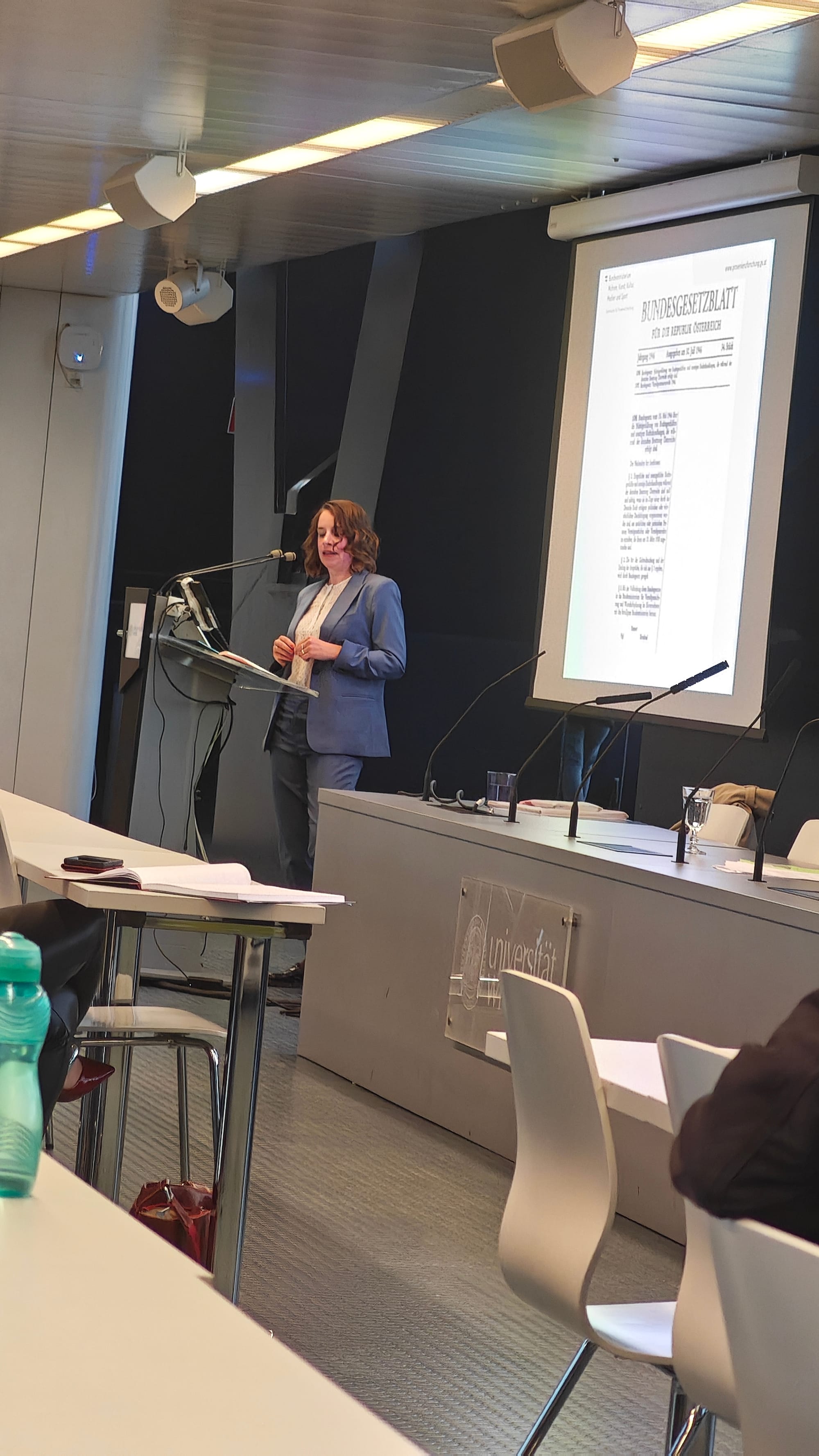
In the evening, I attended (in the audience) a very touching presentation of Dr. Pia Schölnberger, head of the Commission for Provenance Research on "Reconstruction. Provenance Research and (Art) Restitution in Federal Collections" (Rekonstruktion. Provenienzforschung und (Kunst-)Restitution in den Sammlungen des Bundes) in Wiener Rechtsgeschichtliche Gesellschaft. The lecture gave insights into the biographies and fates behind Austrian cases of expropriation of art collectors by the Nazis - and the difficulties to get their property returned after the war.
#arsboni
I did two #arsboni sessions on Wednesday.
In the first one, Katharina Mager-Mičijević gave very interesting insights on how AI is (not) regulated in Europe and why it is so important that as many people as possible get proper AI training.
The second one was a very personal conversation with Dr. Stephanie Krisper on her (legal) career and what price one has to pay when going into politics. I was very much impressed by her honesty and willingness to answer questions openly and directly.
I started (again, thanks to Thursday being a public holiday) to play around a little with clips that I published on LinkedIn/Instagram etc. to make people aware of what I am doing in #arsboni and to learn more about how automated (AI driven) content recognition works in the field.
Here are two examples, I would love to receive feedback on this:
Media
Fabian Burstein is the host of a very nice podcast Bühneneingang, dealing with art and the conditions of art production (in Austria). I was very honored and excited that he invited me so that episode 93 gave me plenty of opportunities to reflect European digital law (and its failures).
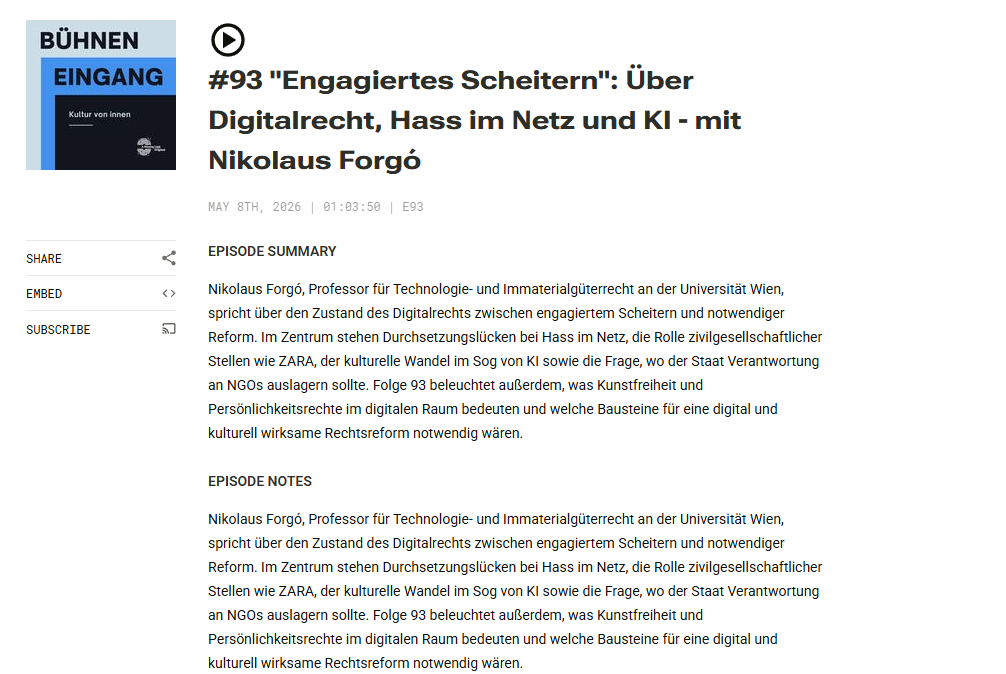
Burstein has a vey curious and open style of asking questions that I appreciated a lot and that led me to rather fundamental arguments. Technically, it gave me the opportunity to see the Missing Link podcast studio for the first time. Shure SM 7B are the mics of choice there as well ;-).
Prospect
Vienna–NUS Inaugural Law and Technology Workshop
Guests from the National University of Singapore (NUS) will be in Vienna on Tuesday, to attend the Vienna–NUS Inaugural Law and Technology Workshop.
Here's the preliminary program:
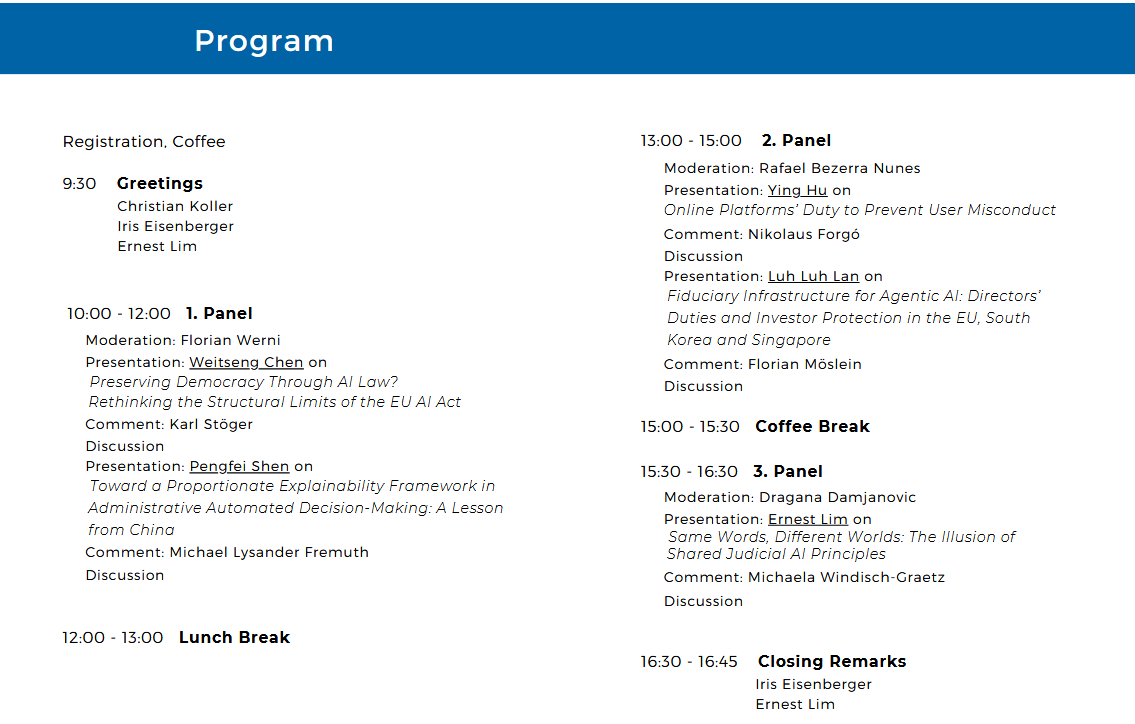
Free entry, registration requested, no stream (as far as I know).
Berlin
On Wednesday I have the privilege to chair the second day of Datenschutzkongress 2026 in Berlin again. It will - again - be an excellent opportunity to meet and to learn, inter alia, from Dr. Axel Voss, Prof. Dr. Gregor Thüsing and other very senior (keynote) speakers.
Paid event, registration still possible, no (public) stream.
Hungary
I am thrilled that (my ex student) Prof. Dr. Gábor Pólyak has accepted my invitation to speak in #arsboni again. He has my deep respect for his direct and critical approach to media law during the Orbán regime. Since the election, he has been very active and internationally visible in explaining (in FAZ (Paywall), Tagesschau, Deutschlandfunk, CNN, etc.) the election's impact on the Hungarian media system and media law. I will see him on Friday, May 22nd at 12.00 and will have all the time to ask him in full detail.
Look and Feel
Podcasts
My podcast consumption time has reached now records this week, I fear, but I found some gems that I want to share:
May I recommend first to listen to a very long and very telling interview with Egisto Ott in Dunkelkammer.
It's mind blowing and very disturbing how such a person could become such a relevant player in Austrian national security.
May I also recommend all episodes I heard so far (and I heard quite some) from Wunderpanik for their fresh and well informed look on AI developments.
 Katharina Mager-Micijevic, Melanie Hölting-Eckert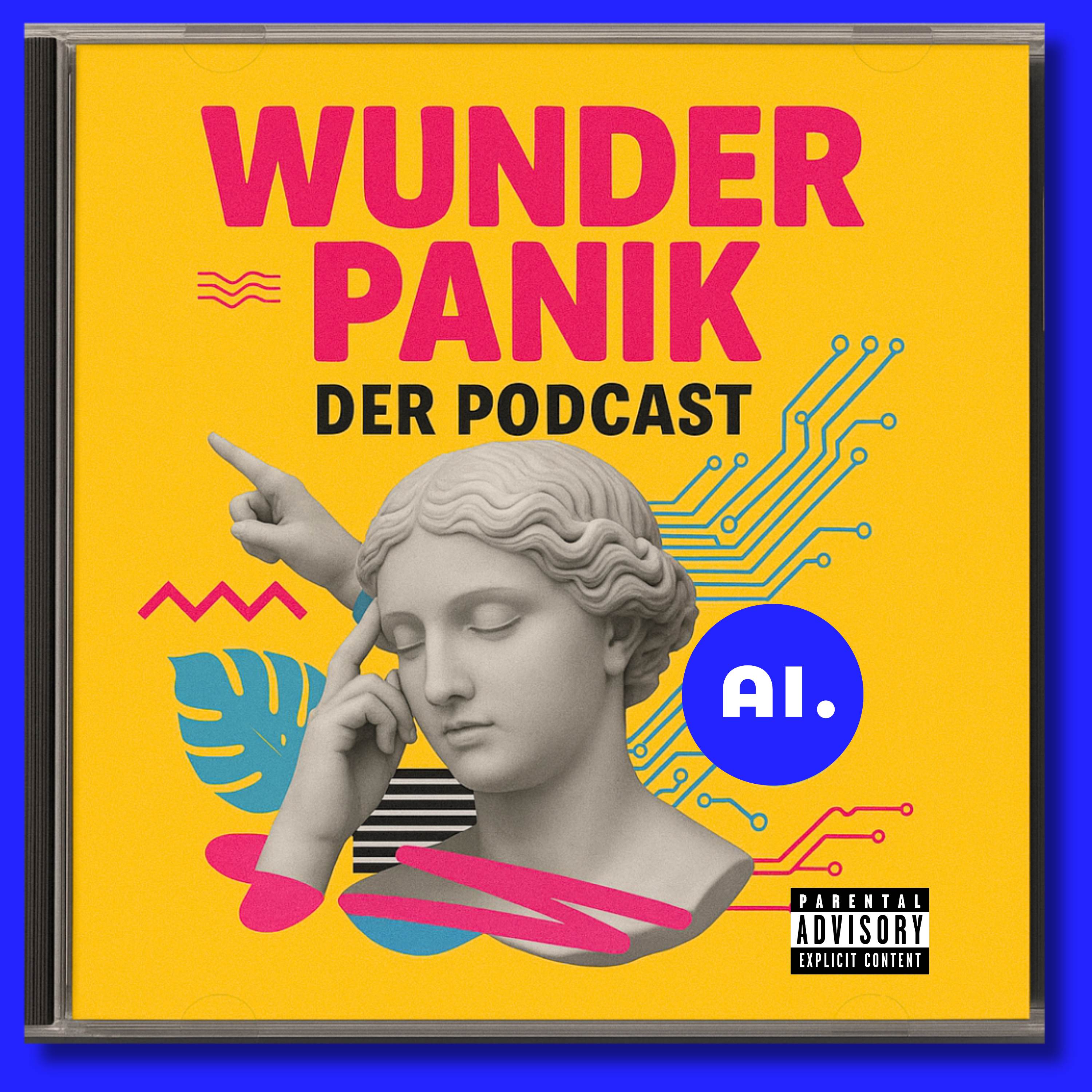
Florian Scheuba has - another - interview with Dr. Andy Kaltenbrunner on the study on public media funding.
This is very different from my own interview style
but probably a better way to gain relevant information from a conversation partner in short time. Soundwise, I like my version better, though :-) (Feedback welcome!).
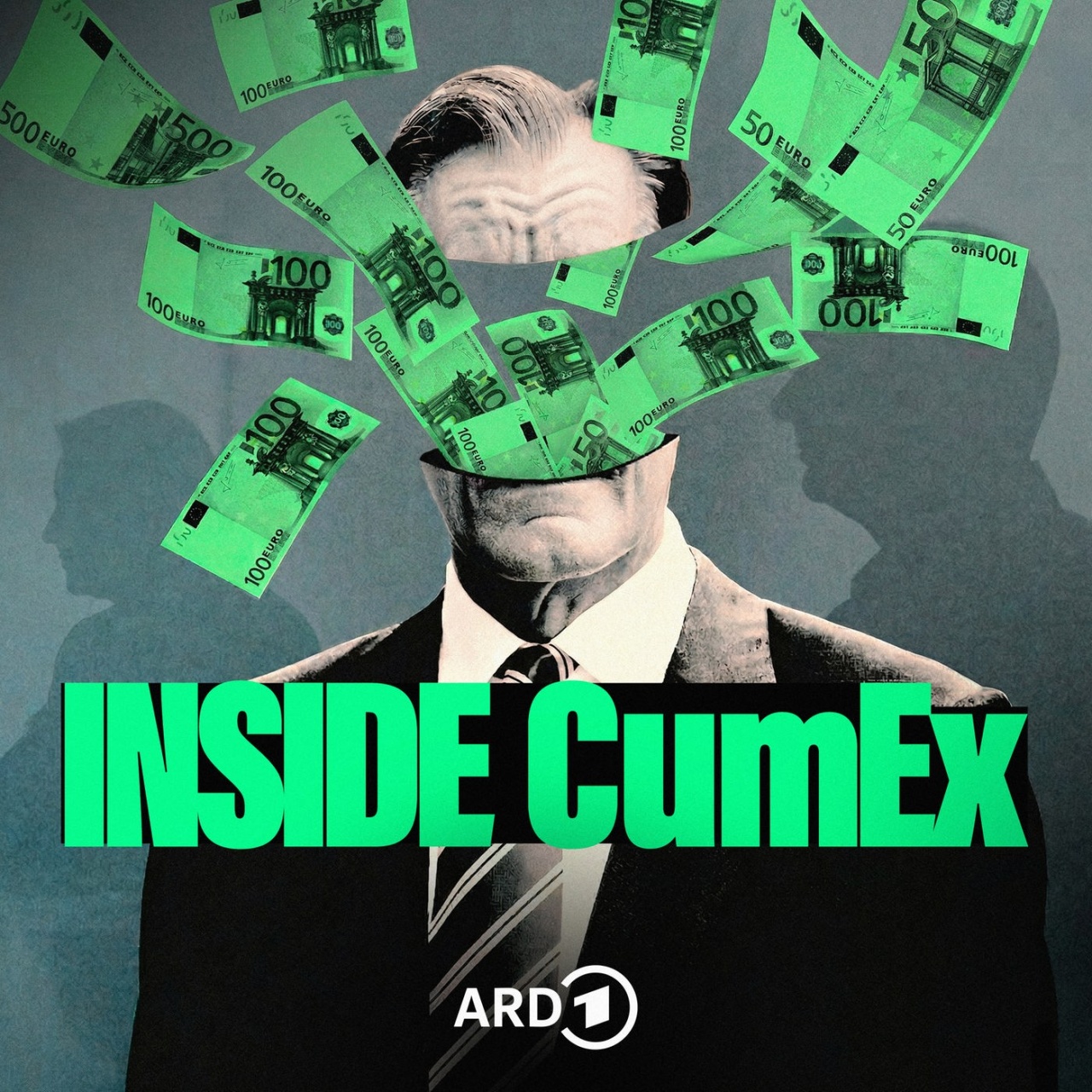
Last not least, ARD came out with (another) podcast on Cum/Ex. I heard the first five of seven episodes so far; there's not so much new on the facts in them and I dislike all the drama in the storytelling, establishing a simplified duel between the good and the bad side, all the distracting sound effects, all the endless repetitions and cliffhangers, but it's the first production I know that has a long interview of Hanno Berger - who was sentenced to 10 years of prison earlier this week. I would have appreciated to hear this interview in full length and in a not so heavily redacted format, though.

Seven Deadly Sins
Daniel Uchtmann and his wonderful book on the seven deadly sins brought me into Buchhandlung Eckart for a public reading on Wednesday.
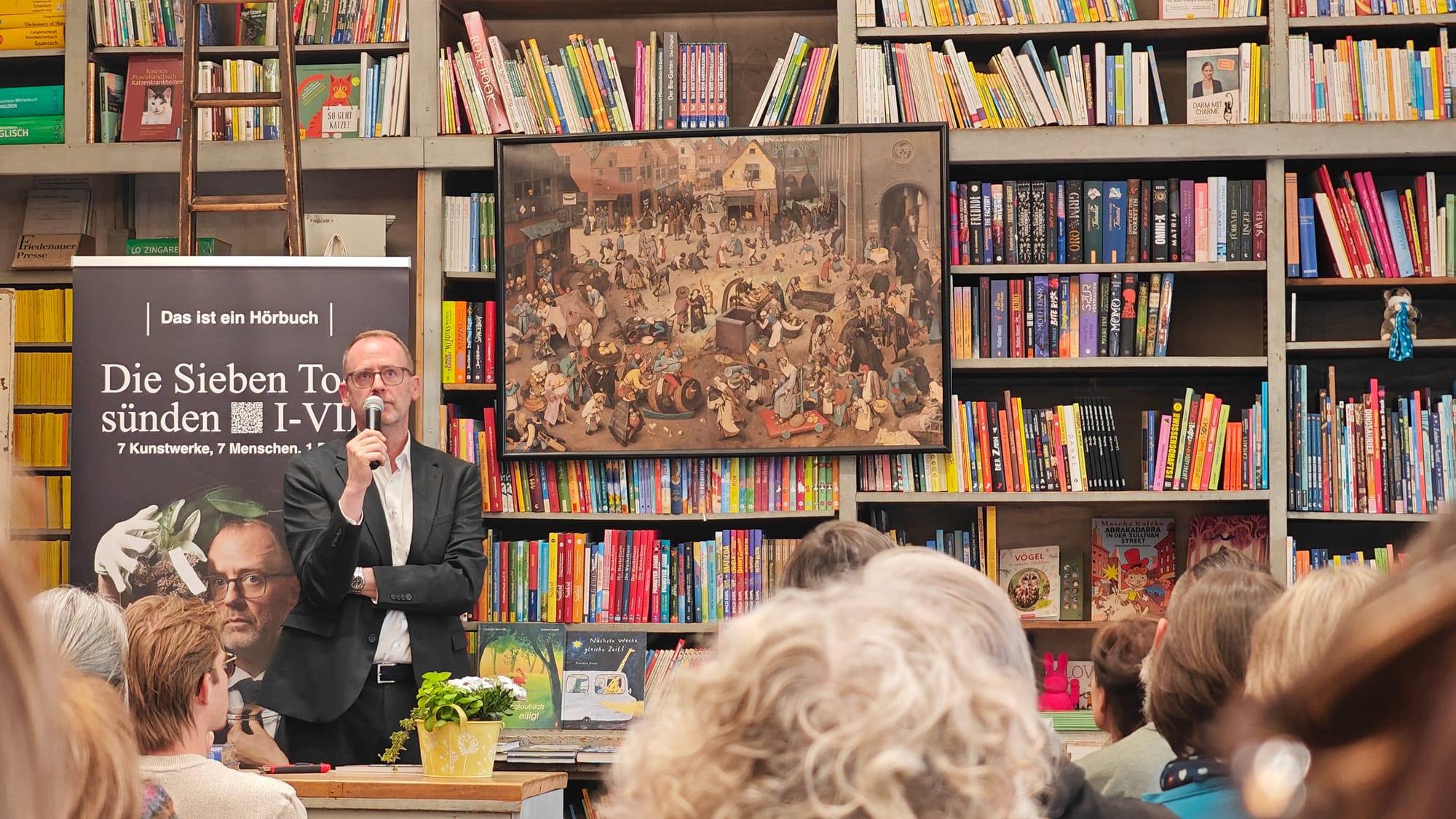
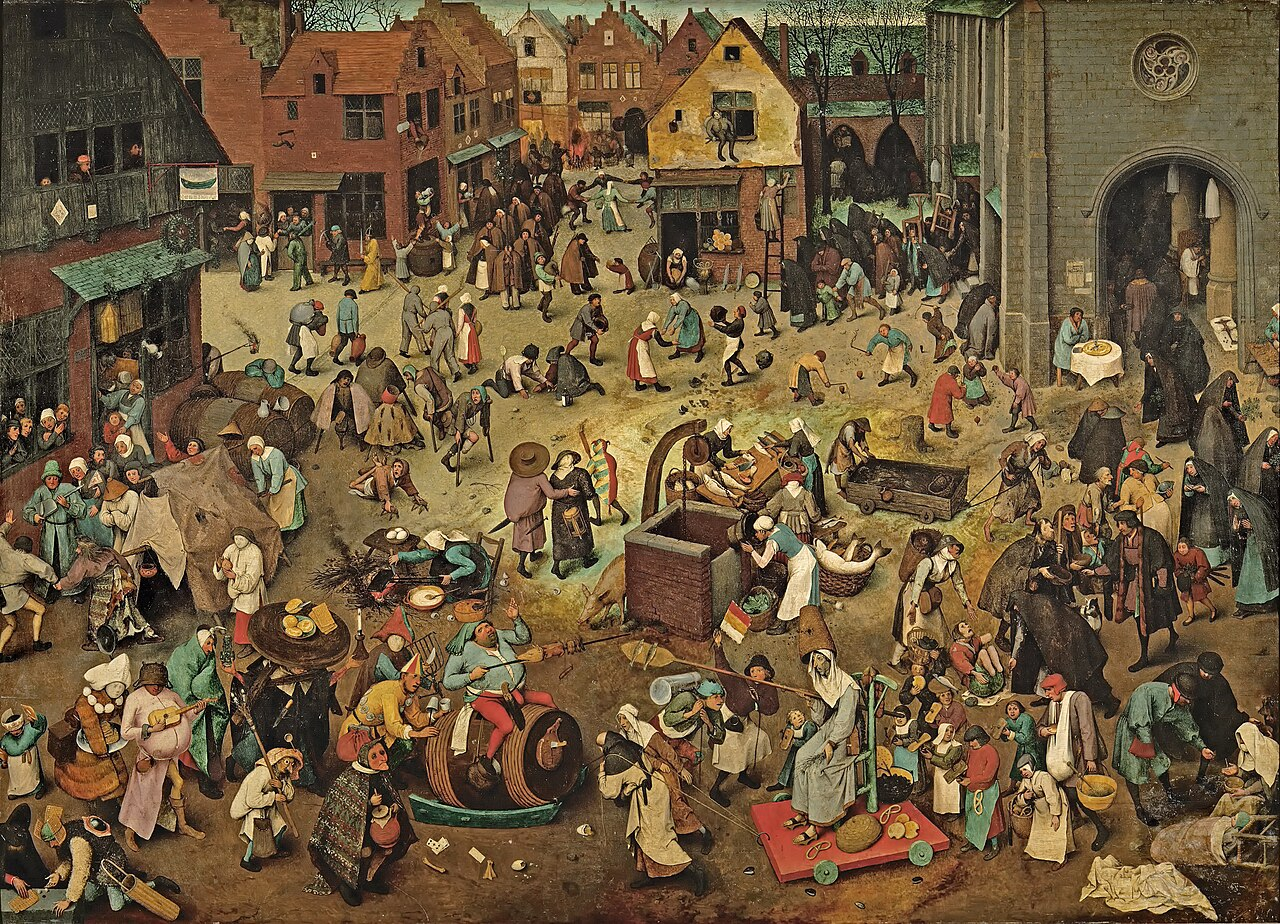
Public readings in bookshops are a very charming type of cultural events one could write or read a book about. The atmosphere with its mixture of fandom, red wine and pretzels, book signings and - surprise, surprise - so many, many other books, is something unique. Bruegel was, of course, present as well (with a replication, unfortunately :-) ).
See Weekly 17/2026 for more appraisal of the book that I highly recommend. May I just add that the other big name, the 'good side', in the Cum/Ex affair - Anne Brorhilker - is one of Uchtmann's interviewees, speaking about greed (more on her also in Weekly 03/2026 and 30/2025) . The conversation I liked most, though, was with Wolfgang Bauer, speaking about the deadly sin of anger, and reporting about how it is to report on war. Breathtaking.
Have a wonderful week and take care of yourself!
Kind regards
Nikolaus (Forgó)